Alpha Lipoic Acid (ALA): Benefits, Uses, Side Effects, and What It Does in Your Body
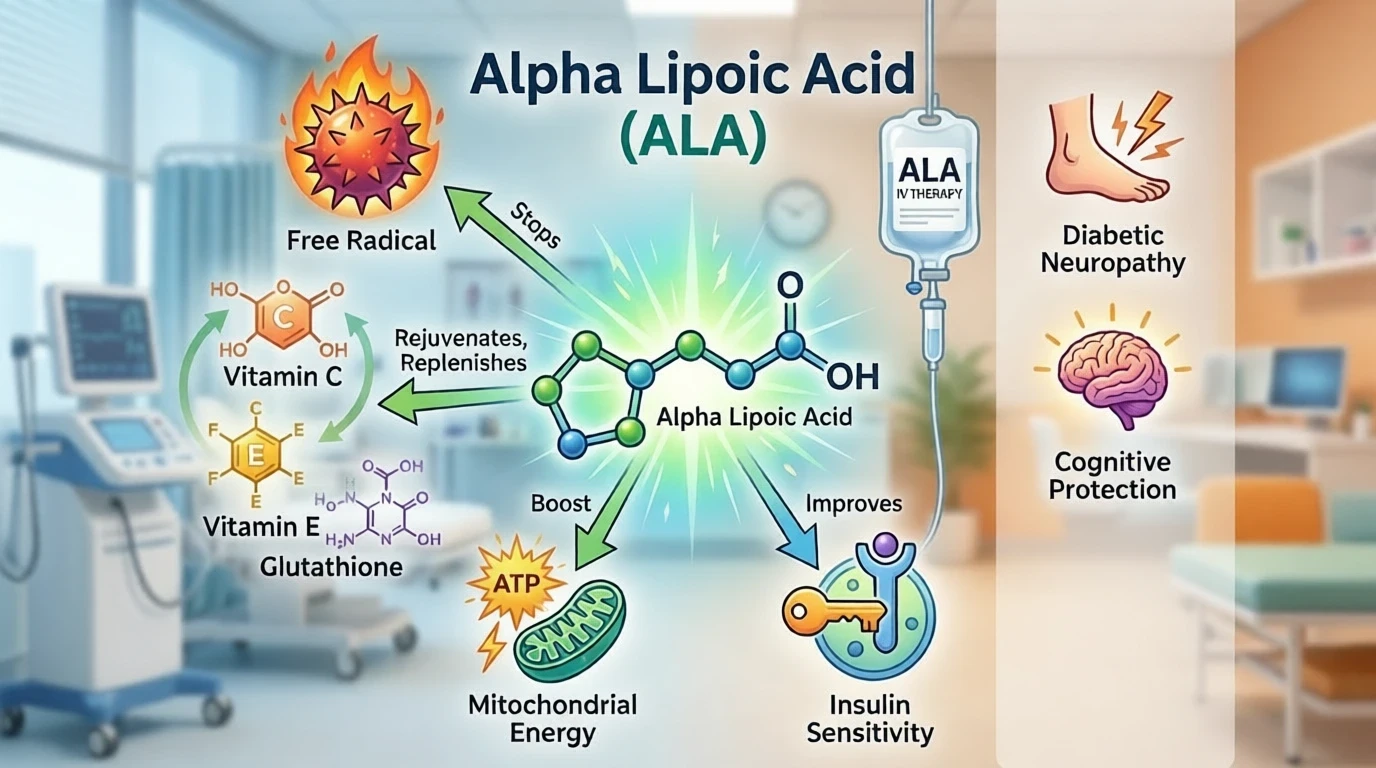
Alpha lipoic acid (ALA) is one of the most clinically studied antioxidants in human biochemistry and one of the most underutilized tools in functional and integrative medicine. Whether you're researching ALA as a supplement, exploring its role in neuropathy treatment, or trying to understand what it actually does at the cellular level, this guide covers the full picture.
What Is Alpha Lipoic Acid?
Alpha lipoic acid is a naturally occurring organosulfur compound synthesized in small amounts by the human body and found in trace quantities in certain foods. It functions as both a coenzyme and a potent antioxidant, operating in both fat-soluble and water-soluble environments. This property that sets it apart from most other antioxidants, which are limited to one or the other.

ALA plays a critical role in mitochondrial energy metabolism. Specifically, it serves as a cofactor for key enzyme complexes, including pyruvate dehydrogenase and alpha-ketoglutarate dehydrogenase. These are responsible for converting glucose into ATP (adenosine triphosphate), the primary energy currency of your cells.
Key identifiers:
Chemical name: 1,2-dithiolane-3-pentanoic acid
Also known as: thioctic acid, lipoate, ALA, R-ALA (the biologically active form)
CAS Number: 1077-28-7
Endogenous production: Yes, but limited production declines with age
Alpha Lipoic Acid in Food: Natural Dietary Sources
The body produces small amounts of ALA on its own, but dietary intake can supplement endogenous synthesis. Alpha lipoic acid in food is found primarily in organ meats and certain plant-based sources.
Animal-based sources of alpha lipoic acid:
Beef kidney and heart (highest concentrations)
Beef liver
Red meat
Organ meats generally
Plant-based sources of alpha lipoic acid:
Spinach
Broccoli
Brussels sprouts
Tomatoes
Peas
Rice bran
Important caveat: Dietary ALA is bound to proteins (lipoyllysine) and is poorly absorbed compared to free-form ALA supplements. Clinical studies consistently use supplemental ALA to achieve therapeutic concentrations that are not realistically achievable through diet alone.
What Does Alpha Lipoic Acid Do?
Understanding what alpha lipoic acid does requires looking at both its antioxidant functions and its metabolic roles.
1. Universal Antioxidant Activity
ALA is frequently described as a "universal antioxidant" because it is soluble in both aqueous and lipid environments. This means it can:
Neutralize reactive oxygen species (ROS) in the bloodstream
Cross the blood-brain barrier to protect neural tissue
Quench free radicals in cell membranes (lipid-soluble environments)
Operate inside cells in cytosol (water-soluble environments)
2. Regeneration of Other Antioxidants
One of ALA's most significant properties is its ability to recycle and regenerate other antioxidants that have been oxidized and rendered inactive:
Glutathione: ALA increases intracellular levels of the body's master antioxidant.
Vitamin C (Ascorbic acid): Regenerates oxidized ascorbate
Vitamin E (Tocopherol): Restores oxidized vitamin E to its active form
Coenzyme Q10: Supports its regeneration in mitochondria
This regenerative cascade makes ALA uniquely powerful compared to antioxidants that simply neutralize free radicals without recycling other protective compounds.
3. Mitochondrial Support
ALA is a direct cofactor in the citric acid cycle, meaning it is structurally required for mitochondrial energy production. Furthermore, ALA activates GLUT4 glucose transporters, which facilitates glucose uptake into cells. This mechanism improves insulin sensitivity and is a primary reason ALA is studied in the context of metabolic health.
4. Heavy Metal Chelation
ALA has documented chelating properties, binding to heavy metals including mercury, arsenic, and cadmium. This is relevant in the context of detoxification protocols and is one reason ALA appears in some IV detox formulations.
5. Insulin Sensitivity and Glucose Metabolism
ALA activates GLUT4 glucose transporters, facilitating glucose uptake into cells. This mechanism improves insulin sensitivity, and it is one of the reasons ALA has been studied in the context of type 2 diabetes management and metabolic syndrome.
The Benefits of Alpha Lipoic Acid: What the Evidence Shows
Alpha Lipoic Acid for Neuropathy
The most robustly studied clinical application of ALA is diabetic peripheral neuropathy. Multiple randomized controlled trials, including the ALADIN (Alpha Lipoic Acid in Diabetic Neuropathy) trials, have demonstrated that intravenous ALA significantly reduces neuropathic symptoms such as burning pain, stabbing sensations, and numbness compared to placebo.
A 2004 meta-analysis published in Diabetes Care found that IV ALA at 600 mg/day for three weeks produced a statistically significant reduction in total symptom scores. The oral form showed similar but more modest effects over longer treatment periods.
ALA is approved as a treatment for diabetic neuropathy in Germany and has been used in clinical practice there for decades.
Anti-Inflammatory Properties
ALA inhibits nuclear factor kappa B (NF-κB), a key transcription factor that drives the expression of pro-inflammatory cytokines including TNF-alpha, IL-1β, and IL-6. By downregulating NF-κB signaling, ALA reduces systemic inflammatory burden at the molecular level, not merely masking symptoms.
This mechanism is directly relevant for conditions involving chronic low-grade inflammation, including autoimmune disorders, metabolic syndrome, and exercise-induced muscle damage. For individuals managing chronic inflammation and pain, ALA addresses one of the root signaling pathways driving that process. IV Anti-Inflammatory & Pain Relief Therapy at The DRIPBaR Bedford pairs compounds like Toradol and Magnesium with antioxidant support for a comprehensive approach to systemic inflammation.
Cognitive Protection and Brain Health
Because ALA crosses the blood brain barrier, it provides antioxidant defense in neural tissue. Research suggests ALA may help reduce amyloid beta accumulation and support mitochondrial function in aging neurons.
Preclinical and early clinical research suggests ALA may:
Reduce amyloid-beta accumulation (relevant to Alzheimer's pathology)
Protect dopaminergic neurons (relevant to Parkinson's research)
Support mitochondrial function in aging neurons
Skin and Anti-Aging Effects
ALA has been explored in dermatology for its ability to reduce markers of photo-aging. Research published in the British Journal of Dermatology found topical ALA reduced roughness and fine lines. Systemically, its antioxidant activity helps neutralize free radicals that accelerate collagen degradation and cellular aging.
Liver Protection
ALA demonstrates hepatoprotective effects, supporting detoxification pathways in the liver and protecting hepatocytes from oxidative damage. It is used in integrative oncology protocols and has been studied in the context of non-alcoholic fatty liver disease (NAFLD).
Athletic Performance and Recovery
ALA reduces oxidative stress generated during intense exercise, attenuates exercise-induced inflammation, and supports mitochondrial efficiency. Athletes using ALA as part of a recovery protocol may experience reduced delayed onset muscle soreness (DOMS) and faster restoration of cellular energy. For those pushing physical performance limits, IV Drip for Athletes & Performance at The DRIPBaR Bedford delivers targeted recovery compounds intravenously for maximum bioavailability.
Alpha Lipoic Acid Supplement: Forms, Bioavailability, and What to Know
ALA supplements are available in two primary forms:
Form | Description | Notes |
Racemic ALA (RS-ALA) | Mixture of R and S enantiomers | Most common; less expensive |
R-ALA | Biologically active form only | Higher potency per mg; less stable; more expensive |
R-ALA is the form produced endogenously and is considered more bioactive. Some research suggests R-ALA may be 40–50% more potent than racemic ALA on a milligram-for-milligram basis.
Oral vs. IV ALA:
Oral ALA has relatively poor and variable bioavailability (~30%) due to first-pass metabolism
Intravenous ALA bypasses gastrointestinal absorption entirely, achieving 100% bioavailability and plasma concentrations that are clinically therapeutic
This distinction matters significantly for neuropathy treatment and serious antioxidant protocols
How Much Alpha Lipoic Acid Should You Take a Day?
There is no established Recommended Dietary Allowance (RDA) for ALA, as it is not classified as an essential nutrient (the body synthesizes it). Clinical dosing ranges vary based on the condition being addressed:
Application | Typical Oral Dose | Notes |
General antioxidant support | 100–300 mg/day | Maintenance range |
Diabetic neuropathy | 600–1,800 mg/day | Divided doses; medical supervision advised |
Insulin sensitivity | 600–1,200 mg/day | With meals |
Cognitive/anti-aging | 300–600 mg/day | Often combined with acetyl-L-carnitine |
IV (clinical) | 300–600 mg per infusion | Administered by licensed medical professionals |
Practical guidance: For general supplementation, 300–600 mg/day is the most common range cited in research. For neuropathy or therapeutic purposes, doses up to 1,800 mg/day have been used under medical supervision.
Alpha Lipoic Acid Before Bed: Does Timing Matter?
The question of whether to take alpha lipoic acid before bed relates to two factors: absorption kinetics and potential for sleep disruption.
What the research shows:
ALA is best absorbed on an empty stomach. Food can reduce bioavailability by up to 30%
Some individuals report mild stimulatory effects (likely from increased mitochondrial activity), which could interfere with sleep if taken at night
Others report no sleep impact
General recommendation: Take ALA 30–60 minutes before a meal. If taking it before bed, take it at least 2 hours after eating. If you notice any interference with sleep onset, shift your dose to morning or midday.
There is no strong clinical evidence that taking ALA specifically before bed offers therapeutic advantages over daytime dosing. Consistency and absorption optimization matter more than timing for most users.
Alpha Lipoic Acid Side Effects
ALA is generally well-tolerated at recommended doses. Most reported side effects are mild and dose-dependent.
Common side effects:
Nausea (most frequently reported, especially on empty stomach)
Stomach upset or cramping
Skin rash (rare; typically at higher doses)
Headache
Less common / higher-dose considerations:
Hypoglycemia: ALA improves insulin sensitivity, so individuals taking diabetes medications or insulin should monitor blood glucose carefully, ALA may potentiate hypoglycemic effects
Thiamine (B1) interaction: Very high doses of ALA may interfere with thiamine-dependent enzymes; this is primarily a concern at supratherapeutic doses
Heavy metal redistribution: In chelation contexts, ALA can mobilize heavy metals; this requires a structured protocol with medical oversight
Contraindications and cautions:
Pregnancy and breastfeeding: insufficient safety data; avoid without medical guidance
Thyroid conditions: some evidence suggests ALA may affect thyroid function at high doses
Drug interactions: caution with insulin, oral hypoglycemics, chemotherapy agents (cisplatin), and thyroid medications
Intravenous ALA requires clinical administration due to the higher concentrations delivered. All IV infusions at licensed clinics are administered by medical professionals and monitored throughout the session.
Alpha Lipoic Acid Uses: Clinical and Integrative Applications Summary
Condition / Goal | Mechanism | Evidence Level |
Diabetic peripheral neuropathy | Antioxidant protection of nerve tissue; improved nerve conduction | Strong (multiple RCTs) |
Chronic inflammation | NF-κB inhibition; cytokine reduction | Moderate-Strong |
Insulin resistance / metabolic syndrome | GLUT4 activation; improved glucose uptake | Moderate |
Cognitive aging / neurodegeneration | BBB-crossing antioxidant; mitochondrial support | Emerging |
Athletic recovery | ROS reduction; anti-inflammatory signaling | Moderate |
Liver health / detoxification | Glutathione regeneration; hepatoprotection | Moderate |
Anti-aging / skin health | Free radical neutralization; collagen protection | Emerging |
Heavy metal chelation | Direct metal binding | Clinical (primarily IV) |
Alpha Lipoic Acid for Weight Loss
ALA is not a weight loss compound in the conventional sense, but research points to several mechanisms through which it may support body composition and metabolic health. Studies, including a 2011 trial published in The American Journal of Medicine, have shown that ALA supplementation reduced body weight and waist circumference in overweight individuals compared to placebo, particularly at doses of 1,200 to 1,800 mg/day.
The mechanisms involve improved insulin sensitivity (reducing fat storage driven by chronically elevated insulin), activation of AMPK (AMP activated protein kinase), a cellular energy sensor that promotes fat oxidation and suppresses lipogenesis, and reduced hypothalamic inflammation, which can regulate appetite signaling. ALA is not a replacement for a structured weight management protocol, but it may serve as a meaningful adjunct, particularly for individuals dealing with insulin resistance or metabolic dysfunction where oxidative stress is a contributing factor. For those pursuing medically supervised weight loss that addresses underlying hormonal and metabolic drivers, Medical Weight Loss and GLP-1 Programs at The DRIPBaR Bedford offers a comprehensive clinical approach that goes well beyond supplementation alone.
Key Takeaways
Alpha lipoic acid is a mitochondrial coenzyme and universal antioxidant that operates in both fat- and water-soluble environments.
Its most evidence-backed clinical use is diabetic neuropathy, where IV ALA has been shown to meaningfully reduce pain, burning, and sensory symptoms.
ALA regenerates glutathione, Vitamin C, Vitamin E, and CoQ10. Amplifying the body's total antioxidant defense.
It exerts anti-inflammatory effects by inhibiting NF-κB, making it relevant for chronic inflammation and pain management.
Oral bioavailability is modest (~30%); intravenous delivery achieves therapeutic plasma concentrations not possible with oral supplementation.
Standard dosing ranges from 300–600 mg/day for general support; therapeutic doses for neuropathy reach 600–1,800 mg/day under medical supervision.
Side effects are generally mild but individuals on diabetes medications should monitor blood glucose closely due to ALA's insulin-sensitizing properties.
References & Further Reading
The following peer-reviewed studies, clinical trials, and meta-analyses were used as primary sources for this article. All references are accessible via PubMed or their respective publishers.
Neuropathy — Clinical Trials (ALADIN Series)
Ziegler D, Hanefeld M, Ruhnau KJ, et al. Treatment of symptomatic diabetic peripheral neuropathy with the anti-oxidant alpha-lipoic acid. A 3-week multicentre randomized controlled trial (ALADIN Study). Diabetologia. 1995;38(12):1425–1433. doi:10.1007/BF00400603. PMID: 8786016. PubMed
Ziegler D, Hanefeld M, Ruhnau KJ, et al. Treatment of symptomatic diabetic polyneuropathy with the antioxidant alpha-lipoic acid: a 7-month multicenter randomized controlled trial (ALADIN III Study). Diabetes Care. 1999;22(8):1296–1301. doi:10.2337/diacare.22.8.1296. PMID: 10480774. PubMed
Ziegler D, Nowak H, Kempler P, Vargha P, Low PA. Treatment of symptomatic diabetic polyneuropathy with the antioxidant alpha-lipoic acid: a meta-analysis. Diabet Med. 2004;21(2):114–121. doi:10.1111/j.1464-5491.2004.01109.x. PMID: 14984445. PubMed
Ziegler D, Low PA, Litchy WJ, et al. Efficacy and safety of antioxidant treatment with α-lipoic acid over 4 years in diabetic polyneuropathy: the NATHAN 1 trial. Diabetes Care. 2011;34(9):2054–2060. doi:10.2337/dc11-0503. PubMed
Neuropathy — Systematic Reviews & Meta-Analyses
Xu J, Lin W, Chen Y, Jin Y. Effects of Oral Alpha-Lipoic Acid Treatment on Diabetic Polyneuropathy: A Meta-Analysis and Systematic Review. Nutrients. 2023;15(16):3634. doi:10.3390/nu15163634. MDPI
Baicus C, et al. Alpha-lipoic acid for diabetic peripheral neuropathy. Cochrane Database of Systematic Reviews. 2024. Cochrane Library
Anti-Inflammatory Mechanisms — NF-κB Inhibition
Zhang WJ, Frei B. Alpha-lipoic acid inhibits TNF-alpha-induced NF-kappaB activation and adhesion molecule expression in human aortic endothelial cells. FASEB J. 2001;15(13):2423–2432. PMID: 11689467. PubMed
Ha H, Lee JH, Kim HN, et al. Alpha-lipoic acid inhibits TNF-alpha induced NF-kappa B activation through blocking of MEKK1-MKK4-IKK signaling cascades. Int Immunopharmacol. 2008;8(2):362–370. PMID: 18182252. PubMed
Ying Z, et al. Evidence that α-lipoic acid inhibits NF-κB activation independent of its antioxidant function. Inflammation Research. 2010. doi:10.1007/s00011-010-0256-7. Springer
Glutathione Regeneration
He L, et al. Regeneration of glutathione by α-lipoic acid via Nrf2/ARE signaling pathway alleviates cadmium-induced HepG2 cell toxicity. Food Chem Toxicol. 2017;103:1–10. PMID: 28262510. PubMed
Weight Loss & Metabolic Effects
Kucukgoncu S, Zhou E, Lucas KB, Tek C. Alpha-Lipoic Acid (ALA) as a supplementation for weight loss: Results from a Meta-Analysis of Randomized Controlled Trials. Obes Rev. 2017;18(5):594–601. doi:10.1111/obr.12528. PMID: 28295905. PMC
Vajdi M, Abbasalizad Farhangi M. Alpha-lipoic acid supplement in obesity treatment: A systematic review and meta-analysis of clinical trials. Clin Nutr. 2019;38(6):2461–2478. doi:10.1016/j.clnu.2018.11.028. Clinical Nutrition
Romo-Hualde A, et al. Effects of oral α-lipoic acid administration on body weight in overweight or obese subjects: a crossover randomized, double-blind, placebo-controlled trial. PMID: 28239907. PubMed
Bobe G, Michels AJ, Zhang WJ, et al. A Randomized Controlled Trial of Long-Term (R)-α-Lipoic Acid Supplementation Promotes Weight Loss in Overweight or Obese Adults. J Nutr. 2020;150(9):2336–2345. doi:10.1093/jn/nxaa203. PMID: 32692358. Journal of Nutrition
Anti-Aging & Skin Health
de Bengy AF, Decorps J, Martin LS, et al. Alpha-Lipoic Acid Supplementation Restores Early Age-Related Sensory and Endothelial Dysfunction in the Skin. Biomedicines. 2022;10(11):2887. doi:10.3390/biomedicines10112887. PMC
Salehi B, et al. Insights on the Use of Alpha-Lipoic Acid for Therapeutic Purposes. Biomolecules. 2019;9(8):356. doi:10.3390/biom9080356.
This content is for informational purposes only and does not constitute medical advice. Consult a qualified healthcare provider before starting any supplement protocol, particularly if you are managing a chronic condition or taking prescription medications.
How Much Alpha Lipoic Acid Should I Take a Day?
For general antioxidant and wellness support, 300 to 600 mg/day is the most widely used range in clinical research. In diabetic neuropathy, studies have used 600 to 1,800 mg/day in divided doses under medical supervision. There is no established RDA for ALA since it is synthesized endogenously, so therapeutic doses should be guided by a healthcare provider, particularly at the higher end of the range where side effects become more likely.
What Is the Difference Between R-ALA and Regular Alpha Lipoic Acid?
Most ALA supplements on the market are "racemic," a 50/50 mixture of the R and S enantiomers. R-ALA is the biologically active form that the body actually produces and uses. Research suggests R-ALA is significantly more bioavailable and potent than racemic ALA on a milligram for milligram basis, meaning a lower dose of R-ALA may produce effects equivalent to a higher dose of standard ALA. R-ALA supplements tend to be more expensive and are less stable, but they represent the more targeted form for therapeutic use.
Can Alpha Lipoic Acid Be Taken With Other Supplements?
Yes, and in many cases ALA works synergistically with other compounds. It is commonly combined with acetyl L carnitine for cognitive and mitochondrial support, with Vitamin C and Vitamin E (since ALA regenerates both), and with B complex vitamins. The main interaction to be aware of is with diabetes medications. Because ALA improves insulin sensitivity, combining it with insulin or oral hypoglycemics without monitoring can increase the risk of hypoglycemia.
How Long Does It Take for Alpha Lipoic Acid to Work?
This depends on the application. For acute neuropathy symptoms, IV ALA studies have shown measurable symptom reduction within three weeks of daily infusions. For oral supplementation targeting antioxidant status or metabolic markers, most studies report meaningful changes at 8 to 12 weeks of consistent use. ALA's antioxidant effects are relatively rapid at the cellular level, but translating that to noticeable symptomatic changes typically requires sustained use. Intravenous delivery accelerates the timeline significantly due to 100% bioavailability and higher achievable plasma concentrations.
Is Alpha Lipoic Acid Safe for Long-Term Use?
ALA has a well established safety profile in the clinical literature, with studies running up to four years showing no significant long term adverse effects at moderate doses. The most commonly reported issue remains GI discomfort, which is generally mitigated by taking it with a small amount of food or switching to an R-ALA form at a lower dose. Individuals with thyroid conditions or those taking medications that affect blood sugar should work with a provider to monitor relevant markers during long term supplementation.