Can Ozone Therapy Support Recovery After Exercise? What We Know
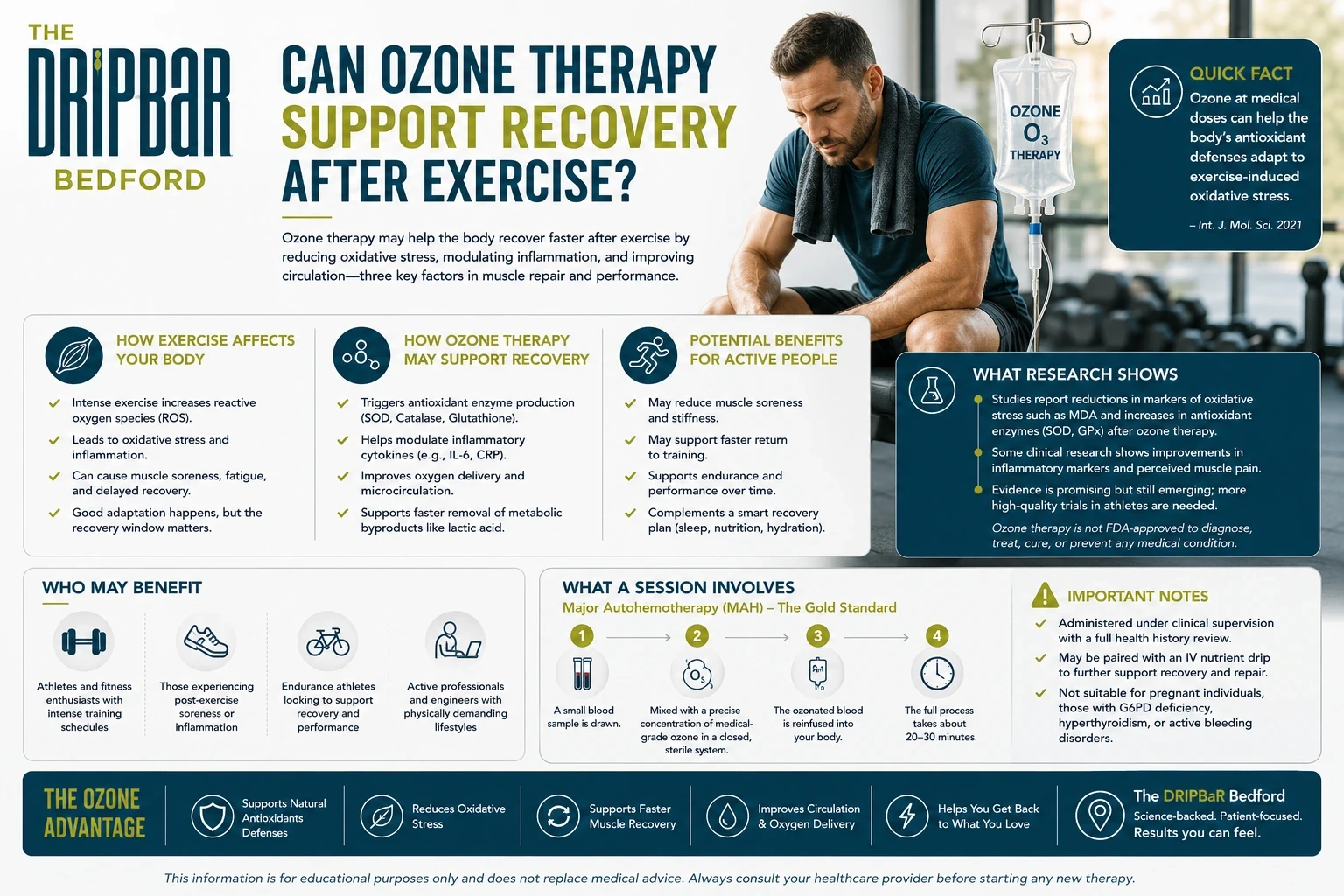
Ozone therapy is being studied for its potential to influence oxidative stress and antioxidant activity after exercise, though current clinical evidence is not yet strong enough to confirm it reliably speeds up recovery or improves athletic performance.
Sleep, hydration, protein intake, and rest remain the proven foundation of exercise recovery. Ozone therapy is best understood as a complementary approach some athletes explore alongside those fundamentals, not a replacement for them.
What Happens to Your Body After a Workout
Exercise naturally increases reactive oxygen species (ROS) production, a normal part of how the body signals adaptation and repair rather than a sign of harm.
Moderate ROS production during training plays a role in cellular signaling and helps the body adapt to exercise stress
Intense or prolonged training can temporarily push oxidative stress higher, contributing to muscle fatigue and soreness
The balance between beneficial signaling and excessive oxidative stress depends on training intensity, nutrition status, and recovery habits
Regular training itself improves the body's own antioxidant defenses and mitochondrial function over time
Quick Fact: Research on redox bioregulation shows that low-dose ozone (10 to 40 µg/mL) is associated with increased antioxidant enzyme activity and reduced oxidative stress markers across multiple organ systems, according to a 2024 systematic review by Viebahn-Haensler and León Fernández published in Molecules.
What Ozone Therapy Does at a Cellular Level
Ozone therapy introduces a controlled, medical-grade concentration of ozone that acts as a hormetic stressor, prompting the body's own antioxidant systems to respond rather than functioning as a drug itself.
The reaction forms "ozone peroxide" in the blood, which activates the Nrf2 pathway, the body's master regulator for antioxidant enzyme production
This mechanism is the same pathway studied in ozone's broader role in chronic inflammation and cellular repair
The most researched clinical delivery method is Major Autohemotherapy (MAH), where a small blood sample is ozonated and reinfused
Dose matters significantly: low concentrations support redox balance, while high concentrations can add to oxidative stress rather than reduce it
Where the Research Actually Stands on Exercise Recovery
Current evidence connects ozone therapy to oxidative stress and antioxidant markers broadly, but direct clinical trials on athletic recovery specifically remain limited.
Studies on ozone and redox regulation have primarily examined conditions like rheumatoid arthritis, osteoarthritis, and general oxidative stress, not sport-specific recovery protocols
The research base is heterogeneous, with different studies using different concentrations, delivery methods, and health conditions, making direct comparisons difficult
Biological mechanisms for a recovery benefit are plausible given ozone's documented effect on antioxidant enzyme activity, but stronger sport-specific clinical trials are still needed
No current research supports claims that ozone therapy reliably improves athletic performance
Quick Fact: A systematic review and meta-analysis of randomized controlled trials found that while ozone therapy shows biological rationale for reducing oxidative stress, results across chronic inflammatory disease trials were not consistently significant overall, underscoring that effectiveness likely depends on dose, condition, and protocol.
Who Explores Ozone Therapy for Recovery
The people most likely to look into ozone therapy as a complementary recovery tool tend to share a few characteristics.
Recreational and endurance athletes training consistently enough that recovery quality affects performance
Strength and resistance training clients managing recurring soreness or slower bounce-back between sessions
Active adults in demanding jobs, including many balancing high-intensity training with the long hours common in the Route 128 tech corridor, who are looking for complementary recovery support rather than a replacement for rest
Anyone already using integrative wellness approaches like IV hydration or amino acid support who wants to understand where ozone fits in
Ozone therapy is not FDA-approved to diagnose, treat, cure, or prevent any medical condition, and it should not be inhaled directly, as ozone gas irritates the respiratory system. It is not appropriate for pregnant individuals or those with G6PD deficiency, hyperthyroidism, or active bleeding disorders. A full health history review is required before any session.
Building a Recovery Routine That Actually Works
The fundamentals still do most of the work in exercise recovery, and any additional approach should sit on top of them, not replace them.
Sleep: The primary window for muscle repair and energy restoration; inconsistent sleep undercuts every other recovery strategy
Hydration: Fluid loss through sweat affects both performance and how the body feels post-workout
Nutrition: Adequate protein and carbohydrates support tissue repair and glycogen replenishment
Rest days: Training harder is not always better; the body adapts during lower-intensity or off days, not during the workout itself
Complementary approaches: Once the basics are consistent, some athletes add options like massage, compression, IV hydration, or ozone therapy as part of an individualized plan
Runners and cyclists along the Minuteman Bikeway and clients training at Bedford and Lexington area gyms often ask how ozone therapy fits alongside the amino acid IV recovery support many already use. If you have already read our post on why your post-workout routine might be missing a step, the honest answer here is that ozone targets a different mechanism, oxidative and redox balance rather than direct amino acid delivery, so the two are not competing approaches but distinct tools with different evidence bases.
Our ozone therapy program at The DRIPBaR Bedford on Great Road is administered under clinical supervision, with a full health history review completed before your first session.
How Does Ozone Therapy Compare to Amino Acid IV Drips for Recovery?
The two target different mechanisms. Amino acid IV drips deliver the direct building blocks for muscle repair, while ozone therapy is studied for its effect on oxidative stress and antioxidant activity, making them complementary rather than interchangeable.
Can Ozone Therapy Speed Up Muscle Recovery?
Current research shows ozone therapy influences oxidative stress and antioxidant markers, but there is not yet enough sport-specific clinical evidence to confirm it reliably speeds up muscle recovery after exercise.