How Long Does IV Therapy Take? What to Expect Before, During, and After
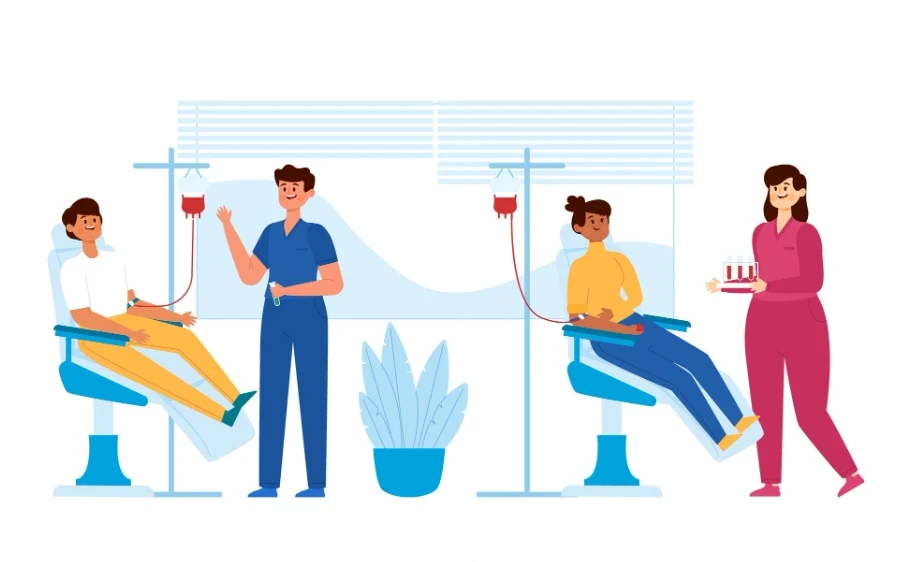
Most IV therapy sessions take between 30 and 90 minutes from start to finish, though the exact time depends on which drip is being administered. A simple hydration drip runs faster than a high-dose vitamin C infusion, and NAD+ therapy takes considerably longer than either. Knowing what affects that timeline makes it easier to plan a session around a workday, a symptom, or an event.
This guide breaks down what to expect before, during, and after IV therapy, with typical timing for the most common drip types.
Before your session: what to expect
Most appointments begin with a short intake covering health history and the goal for that visit, followed by placement of a small IV catheter, usually in the arm. This part takes about 5 to 10 minutes. Arriving hydrated tends to make catheter placement faster and more comfortable, since well-hydrated veins are easier to access.
Typical time: 5 to 10 minutes
What happens: brief health check, drip selection or confirmation, catheter placement
During your session: how long the drip itself takes
This is the part that varies most by drip type. The infusion rate is set for comfort and safety, which is why higher-volume or higher-dose formulas take longer than simpler ones.
Hangover and quick-recovery drips: the fastest option
Hangover-focused drips are typically formulated as simpler fluid and electrolyte blends, which infuse faster than complex or high-dose formulas.
Typical time: 30 to 45 minutes
Related service: IV Drip for Hangover
Hydration and recovery drips: quick and straightforward
Hydration-focused IV therapy uses a simpler fluid and electrolyte base, which allows for one of the shorter infusion times among common drip types.
Typical time: 30 to 45 minutes
Related service: Hydration & Recovery Drips
Energy and immunity drips: a standard mid-length session
Energy and immunity formulas add B-vitamins or immune-supportive nutrients to the base fluid, which puts them in the standard mid-range for infusion time.
Typical time: 45 to 60 minutes
Related services: Energy Drips · Immunity Drips
Sickness-support drips: timed around comfort, not just formula
When IV therapy is used to support the body while feeling unwell, the infusion rate is often adjusted for comfort, which can extend the session slightly compared to a routine wellness drip.
Typical time: 45 to 60 minutes
Related service: IV Drip for Sickness
High-dose vitamin C and detox drips: slower by design
Higher-dose formulas, including high-dose vitamin C and detox-focused blends, are infused more slowly to support comfort and proper absorption, which extends total session time compared to standard drips.
Typical time: 60 to 90 minutes
Related services: High-Dose Vitamin C Drips · Detox & Chelation Drips
NAD+ therapy: the longest common session
NAD+ is the clearest exception to the standard 30-to-90-minute range. NAD+ IV therapy typically runs two to four hours because the infusion rate has to stay slow to avoid side effects like chest pressure or flushin.
Typical time: 2 to 4 hours
Related service: NAD+ IV/IM Drips & Shots
After your session: what happens once the drip is done
Once the infusion finishes, the catheter is removed and most people are free to leave right away. IV vitamin therapy typically doesn't involve any downtime, and most people feel energized and refreshed immediately following the session. Effects can vary by drip type. Hydration benefits are often noticeable right away, while vitamin and nutrient effects tend to build over the following day or two.
Typical time: no required recovery period for most drips
What to expect: normal activity resumes immediately for most people
What makes one session longer than another
A few factors consistently affect total time regardless of which drip is chosen:
Bag volume: larger fluid volumes take longer to infuse than smaller ones
Ingredient concentration: higher-dose formulas are run more slowly for comfort and absorption
Vein access: well-hydrated veins are typically faster and easier to access
Individual factors: body weight and overall health can affect infusion pace
What is the shortest IV therapy session?
Hydration and hangover-focused drips tend to be the shortest, typically running 30 to 45 minutes for the infusion itself.
Why does NAD+ take so much longer than other drips?
NAD+ has to be infused slowly to avoid side effects like flushing or chest discomfort, which extends the session to 2 to 4 hours compared to the 30-to-90-minute range for most other drips.
Do I need to schedule extra time beyond the infusion itself?
Yes. Intake, catheter placement, and a short wrap-up typically add 10 to 15 minutes beyond the infusion time listed for each drip type.
Can I go back to work right after IV therapy?
For most standard drips, yes. There is generally no required downtime, and most people resume normal activity immediately after the session.
Does drinking water beforehand make the session faster?
Arriving well-hydrated can make catheter placement quicker and more comfortable, since hydrated veins are easier to access, though it does not significantly change the infusion time itself.