How to Prepare for an IV Therapy Appointment
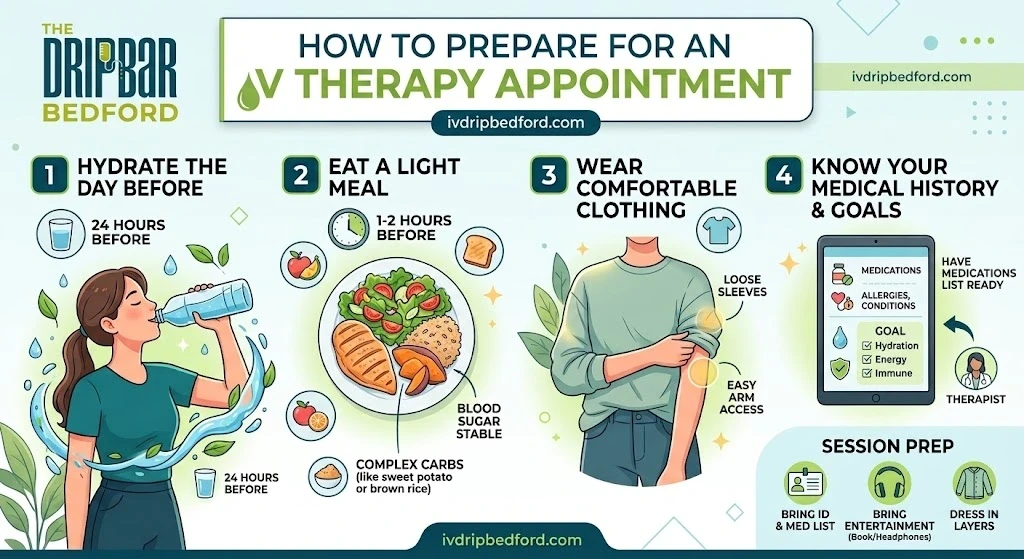
Preparing for an IV therapy appointment mainly comes down to three things: arriving hydrated, eating a light meal beforehand, and wearing clothing that gives easy access to your arm. A few extra steps, like reviewing your medical history and setting aside time to relax during the session, round out a smooth first visit. None of this requires much effort, but skipping it can turn an easy forty five minute appointment into a less comfortable one.
Walking into a first IV session without knowing what to expect is one of the most common reasons people feel more nervous than they need to. This guide covers every step worth taking before you sit down for your drip, from what to eat the morning of to what questions to bring for your provider.
Book With the Right Information on Hand
A quick consultation before booking helps match the right drip to your goals, whether that means hydration, energy, immune support, or recovery. Providers typically ask about current medications, allergies, and any medical conditions before recommending a formula, so having that information ready speeds up the process.
Bedford clients coming in after a Middlesex County allergy flare, a rough week of travel, or a hard training block at one of the local gyms often benefit from mentioning that context during booking. It helps the team steer toward a drip built for the specific situation rather than a generic default.
Hydrate the Day Before Your Appointment
Drinking water throughout the day before your session is one of the most effective things you can do to prepare, since well hydrated veins are larger and easier to access. Dehydrated veins tend to constrict, which can make it harder for the provider to find a good injection site and may extend the time it takes to get started.
How Much Water to Drink Before IV Therapy
Aim for consistent water intake through the twenty four hours leading up to your appointment rather than trying to catch up with a large amount right before you arrive. Sixteen to twenty ounces in the few hours before your session is a reasonable target on top of your normal daily intake. A small pinch of salt in a glass of water can help the body retain fluid slightly longer if you tend to run dehydrated.
Eat a Light Meal Before You Arrive
A small meal with protein and complex carbohydrates about one to two hours before your appointment helps keep blood sugar stable throughout the infusion. Skipping food beforehand raises the chance of feeling dizzy, lightheaded, or nauseated once the drip starts, especially for first time patients.
Oatmeal with fruit, eggs with whole grain toast, or a protein smoothie all work well. Heavy, greasy meals are worth avoiding since they take longer to digest and can leave you feeling sluggish during the session. Caffeine and alcohol are also better skipped on appointment day, since both work against the hydration you are trying to build up.
Wear Clothing That Gives Easy Arm Access
Loose fitting sleeves or a short sleeve top make it easier for the provider to access a vein without adjusting your clothing during the session. Tight sleeves that need to be rolled up repeatedly can slow things down and add unnecessary discomfort.
Comfortable layers are worth considering too, since IV lounges tend to run on the cooler side and sessions can last thirty to sixty minutes depending on the drip. A blanket is usually available if needed, but dressing warm from the start avoids the issue altogether.
What to Bring to Your Appointment
A list of current medications, a photo ID, and anything to keep you occupied for the session are the main items worth bringing. Most of the appointment involves sitting still while the drip infuses, so having a book, headphones, or a podcast queued up makes the time pass more comfortably.
Item | Why It Helps |
|---|---|
Photo ID | Required for check in and intake paperwork |
Medication and allergy list | Helps the provider select a safe, effective formula |
Water bottle | Continues hydration before and after the session |
Entertainment (book, phone, headphones) | Makes the thirty to sixty minute session pass comfortably |
A light jacket or sweater | IV lounges tend to run cool |
Questions Worth Asking Before Treatment
Asking about the specific formula, expected duration, and any possible side effects gives you a clearer picture of what the session will involve. A good provider walks through the ingredients in your drip and explains why each one was chosen for your goals, whether that means faster recovery, immune support, or general hydration.
First time patients often benefit from asking how the results typically feel afterward and whether a follow up session is recommended. This is also the right moment to mention any anxiety about needles, since most providers can adjust their approach to make the process easier.
What to Expect Once You Arrive
Check in, a short intake review, and IV placement usually take no more than ten to fifteen minutes before the infusion itself begins. A provider reviews your health history one more time, confirms the drip you selected, and inserts the IV in a comfortable seated or reclined position.
Most sessions run between thirty and sixty minutes depending on the formula, with the Hydration & Recovery IV Therapy typically on the shorter end and more concentrated formulas taking longer. Staying relaxed during this window, whether that means closing your eyes or catching up on a podcast, is really the only thing left to do once the IV is in place.
Ready for Your First Visit in Bedford
The team at The DRIPBaR Bedford walks every first time patient through the process from booking to aftercare, so nothing about the appointment feels unfamiliar. Whether the goal is hydration, energy, or immune support, a quick conversation before your visit makes sure the right formula is ready when you arrive.
This article was reviewed by the clinical team at The DRIPBaR Bedford, a licensed IV hydration and wellness clinic serving Bedford, MA and Middlesex County. For general guidance on infusion safety, resources such as the CDC Injection Safety guidelines (cdc.gov) offer additional background reading.
Should I Eat Before My IV Therapy Appointment?
Eating a light meal with protein about one to two hours before your appointment is recommended, since it helps keep blood sugar stable and reduces the chance of feeling lightheaded during the infusion.
How Early Should I Arrive for an IV Therapy Appointment?
Arriving about fifteen minutes early allows time for check in, intake paperwork, and a brief conversation with your provider before the infusion begins.
Can I Drive Myself Home After IV Therapy?
Most patients are able to drive themselves home after IV therapy, since the treatment is not sedating. Some people feel more relaxed than usual afterward, so planning a lighter schedule for the rest of the day is a reasonable precaution.
Does IV Therapy Hurt?
IV therapy involves a brief pinch during needle insertion, similar to a standard blood draw, followed by minimal discomfort for the rest of the session. Staying hydrated beforehand makes the needle insertion noticeably easier.
How Long Does an IV Therapy Session Take?
Most IV therapy sessions run between thirty and sixty minutes, depending on the specific drip and how quickly the fluid is able to infuse comfortably.