IV Drip for Migraine and Headache Relief: What the Research Says
If you experience migraines, you are not alone. Migraines are one of the most common neurological disorders, and the World Health Organization estimates they affect more than a billion people worldwide every year. They are not just painful. They can be debilitating and unpredictable, making it hard to enjoy both your personal and professional life.
There is no outright cure for migraines, but symptoms can often be managed by avoiding known triggers and combining lifestyle changes with treatments backed by research, including IV infusions. Here is what to know about migraine symptoms and causes, along with the most effective IV ingredients used for relief.
Migraine Symptoms and Causes
The exact cause of migraines is still not fully understood, but they are believed to result from pain-signaling substances released around the blood vessels and nerves connected to the brain. Triggers vary by person and commonly include genetics, sleep deprivation, skipped meals, certain foods, caffeine, stress, and environmental factors such as bright or flickering lights, changes in barometric pressure, air quality, weather, and strong odors, according to the American Migraine Foundation and the Cleveland Clinic.
Migraine attacks are also unpredictable in length, lasting anywhere from a few hours to several days. Common symptoms include:
A throbbing, pulsing headache
Changes in vision
Nausea or vomiting
Sensitivity to light, sound, and smell
Dizziness
Pain around the eyes, jaw, or neck
Fatigue that lingers after the headache resolves
For Bedford residents, weather is a documented factor worth watching. Rapid barometric pressure swings across the region are a common trigger, explored further in our post on barometric pressure and migraines in Bedford, MA.
Why IV Therapy Is Different From Oral Medication
During a migraine attack, the digestive system slows down significantly, a phenomenon called gastric stasis. This means oral medications, including over-the-counter pain relievers, are absorbed more slowly and less completely right when relief is needed most, a pattern documented in migraine and gastrointestinal research published on PubMed Central.
IV therapy bypasses the digestive tract entirely, delivering vitamins, minerals, and medications directly into the bloodstream. This allows for full absorption and a faster onset of relief compared to swallowing a pill during an active attack.
Key Ingredients in a Migraine IV Protocol
Magnesium
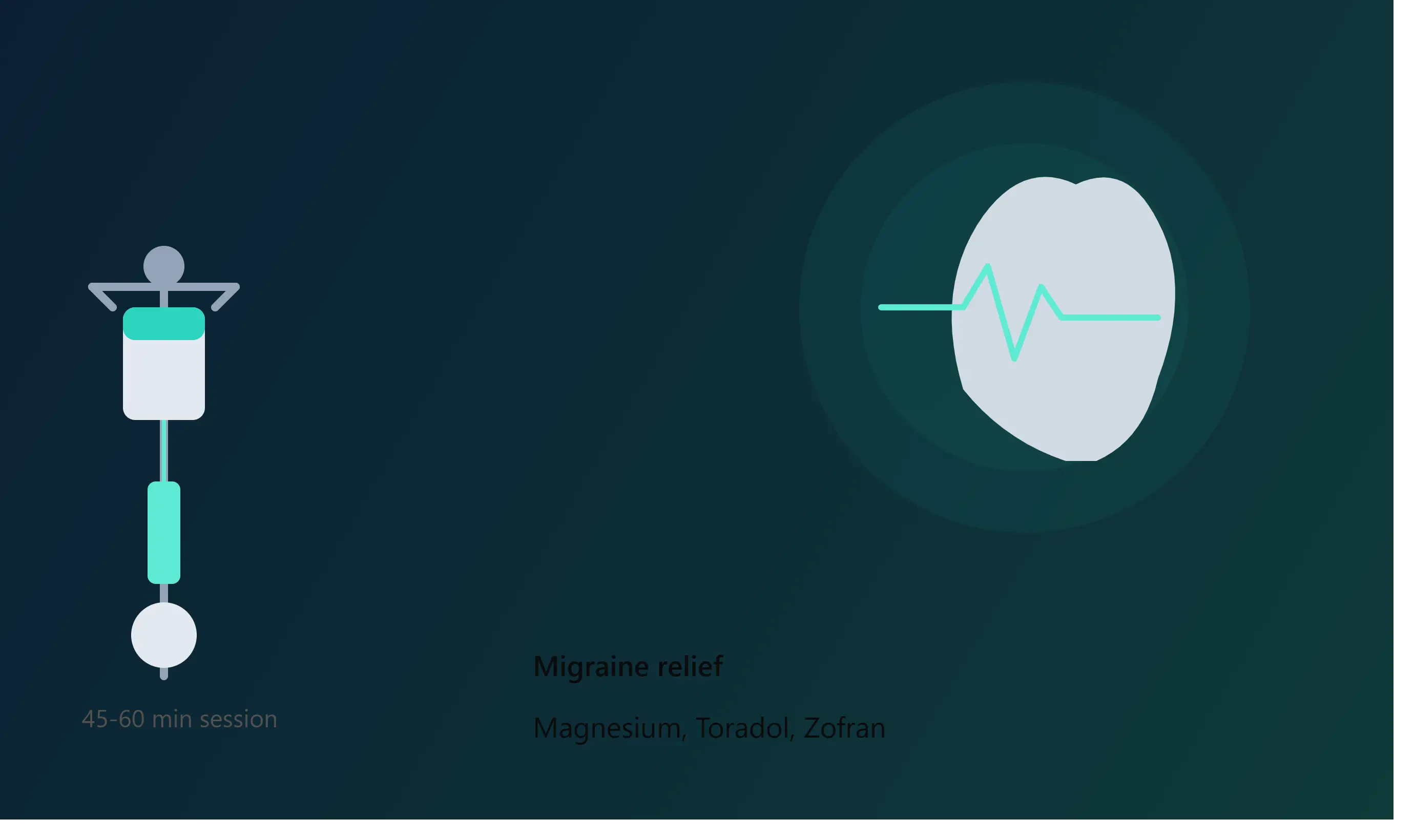
Magnesium is involved in more than 300 enzyme systems in the body, including nerve and muscle function, and migraine attacks have repeatedly been linked to low magnesium levels. A meta-analysis of 11 randomized controlled trials covering nearly 950 participants, published in Pain Physician Journal and available through the National Institutes of Health, found that intravenous magnesium significantly relieved acute migraine attacks within 15 to 45 minutes of infusion, with benefits still measurable at 24 hours.
Toradol (Ketorolac)
Toradol is a non-opioid, nonsteroidal anti-inflammatory drug that works by blocking the production of prostaglandins, the compounds responsible for pain, inflammation, and fever. A systematic review and meta-analysis in Academic Emergency Medicine found that ketorolac offers pain control comparable to or better than several other commonly used migraine medications, with a favorable side effect profile. A separate emergency department study found that ketorolac and magnesium sulfate were both significantly effective for migraine pain, with magnesium showing an edge at the one and two hour marks.
Zofran (Ondansetron)
Nausea is one of the most common and most bothersome migraine symptoms, and it can make oral medication nearly impossible to keep down. Zofran is an anti-nausea medication commonly used in emergency and clinical settings to control nausea and vomiting quickly, allowing the body to rest and rehydrate while the other ingredients go to work.
What to Expect From a Migraine IV Session
Most clients notice a reduction in pain and nausea within 15 to 30 minutes of starting the infusion
Sessions typically run 30 to 60 minutes depending on the protocol
Treatment is administered by licensed nursing staff after a brief health screening
A calm, low-light setting helps if light sensitivity is part of your migraine pattern
Curious whether IV therapy is right for your migraines? Visit IV Drip Bedford to learn more about our full range of IV treatments and book a session.
What Causes A Migraine?
The exact cause is not fully understood, but migraines are linked to pain-signaling activity around blood vessels and nerves in the brain, often triggered by genetics, stress, sleep changes, certain foods, or environmental shifts like barometric pressure.
How Fast Does IV Therapy Work For A Migraine?
Many people notice relief within 15 to 45 minutes, since the ingredients bypass the digestive system and enter the bloodstream directly.
Is Magnesium Actually Effective For Migraines?
Research supports it. A meta-analysis of multiple randomized controlled trials found intravenous magnesium significantly reduced acute migraine pain within 15 to 45 minutes of infusion.
Can IV Therapy Help With Migraine-Related Nausea?
Anti-nausea medication is commonly included in migraine IV protocols specifically because nausea is one of the most disruptive symptoms of an attack.
How Often Can Someone Get A Migraine IV?
It depends on individual health history and frequency of attacks. A licensed provider can help determine an appropriate plan during a consultation.