What Is Systemic Inflammation? The Symptoms Most People Dismiss
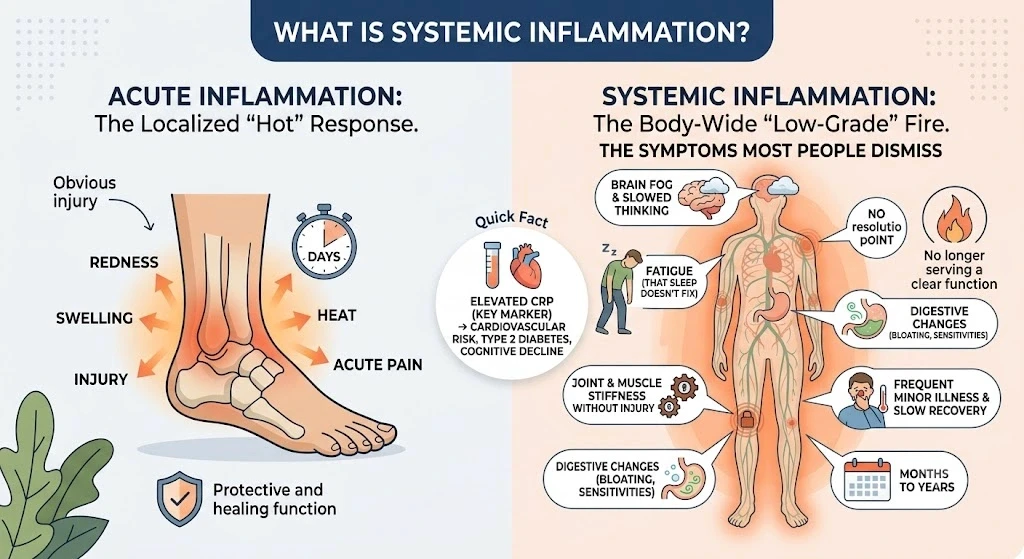
Systemic inflammation is a low-grade, body-wide immune response that persists for months or years without the swelling, redness, or acute pain typically associated with injury or infection, which is why its main symptoms, fatigue, brain fog, and joint stiffness, are routinely dismissed as normal signs of aging or stress rather than recognized as a single inflammatory pattern.
Quick Fact: Elevated levels of C-reactive protein (CRP), a key marker of systemic inflammation, are associated with increased risk of cardiovascular disease, type 2 diabetes, and cognitive decline, even in people who report feeling generally healthy.
What Is Systemic Inflammation, Exactly?
Systemic inflammation is a sustained, low-grade activation of the immune system that affects the whole body rather than one localized site. Unlike acute inflammation, which is a short-term, protective response to injury or infection, systemic inflammation persists without a clear resolution point and can continue circulating inflammatory signals for months or years.
Acute vs. Chronic Inflammation
Factor | Acute Inflammation | Systemic (Chronic) Inflammation |
|---|---|---|
Duration | Days | Months to years |
Trigger | Clear (injury, infection) | Often diffuse or unclear |
Symptoms | Localized, obvious | Body-wide, subtle |
Purpose | Protective and healing | No longer serving a clear function |
Common markers | Swelling, redness, heat | Fatigue, brain fog, joint stiffness |
What Drives It
Chronic low-grade inflammation is typically the result of several overlapping factors rather than a single cause:
Ongoing psychological or physical stress, which keeps cortisol and inflammatory cytokines elevated
Poor sleep quality or insufficient sleep duration
A diet high in processed foods and refined sugar
Sedentary behavior over long periods
Excess visceral fat, which is metabolically active and produces inflammatory signaling molecules
Underlying gut imbalances that allow inflammatory triggers into circulation
Chronic stress in particular is closely tied to this picture. Elevated cortisol from ongoing stress does not just affect mood and energy, it also disrupts the body's ability to regulate inflammation. If you have not already, it is worth reading how chronically elevated cortisol drives many of these same downstream effects.
The Symptoms Most People Dismiss
The symptoms of systemic inflammation are extractable as a defined cluster: persistent fatigue, cognitive fog, joint or muscle stiffness without injury, and disrupted digestion, all occurring together rather than in isolation. These symptoms are easy to dismiss individually because each one has dozens of other possible explanations.
The Symptoms That Get Overlooked
Fatigue that sleep does not fix. Waking up tired even after eight hours is a common early sign, since inflammatory cytokines interfere with restorative sleep cycles.
Brain fog and slowed thinking. Difficulty concentrating, word-finding trouble, or a general mental sluggishness that was not there a few years ago.
Joint and muscle stiffness without a clear injury. Aching knees, stiff shoulders, or a sore lower back that shows up gradually rather than from a specific event.
Digestive changes. Bloating, irregular bowel habits, or new food sensitivities that were not previously an issue.
Skin changes. Dullness, slower healing, or flare-ups of existing skin conditions like eczema or psoriasis.
Frequent minor illness. Catching colds more often or taking longer than usual to recover from them.
Why These Symptoms Get Missed
Each symptom on its own looks like a normal part of getting older or being busy. The pattern only becomes clear when several of these show up together and persist for weeks or months. Most patients do not connect fatigue, joint stiffness, and brain fog as a single inflammatory picture until they are asked about all three at once.
Who Is Most at Risk in Bedford
The Route 128 technology corridor and the research environment around MIT Lincoln Laboratory and Hanscom Field mean a large share of the Bedford workforce spends long hours at a desk under sustained mental pressure, a combination closely linked to elevated inflammatory markers. Long commutes, disrupted sleep from shift-based defense and research schedules, and limited time for movement all add to the inflammatory load carried by this population.
Common Bedford Patient Profiles
Engineers and researchers with long sedentary hours and high cognitive demand
Professionals managing frequent travel through Logan Express with disrupted sleep routines
Endurance athletes training on the Minuteman Bikeway who under-recover between sessions
Adults over 40 managing early joint stiffness alongside a demanding work schedule
How IV Therapy Can Support Inflammation Management
IV anti-inflammatory therapy delivers antioxidants and nutrients directly into the bloodstream at concentrations not achievable through oral supplementation, providing more immediate support for the oxidative stress that accompanies chronic inflammation. This does not replace the lifestyle changes that address the root causes, but it can support the body's antioxidant capacity while those changes take hold.
What to Expect
Sessions typically combine anti-inflammatory nutrients with hydration support
Many patients notice improved energy and reduced stiffness within the days following a session
A series of sessions over several weeks is more effective than a single treatment for sustained inflammatory support
Patients in Bedford working on both the cortisol and inflammation side of this picture often start with our anti-inflammation and pain relief IV therapy, which is designed specifically to support the body's response to chronic, low-grade inflammatory load.
Can Systemic Inflammation Be Detected With A Blood Test?
Yes. Common markers include C-reactive protein (CRP) and erythrocyte sedimentation rate (ESR), both of which can indicate elevated systemic inflammation when ordered by a physician. These tests do not diagnose a specific condition on their own but can confirm that inflammatory activity is elevated.
Is Chronic Inflammation The Same As An Autoimmune Condition?
No. Chronic low-grade inflammation is a general state of immune activation that can occur without any autoimmune diagnosis. Autoimmune conditions involve the immune system specifically attacking the body's own tissue and require separate medical evaluation and treatment.
How Long Does It Take To Reduce Systemic Inflammation?
Meaningful reduction in chronic inflammation typically takes weeks to months of consistent changes to sleep, diet, stress management, and activity level. IV therapy can support this process, but it works alongside those changes rather than replacing them.
Does Stress Really Cause Inflammation?
Yes. Chronic stress keeps cortisol and inflammatory cytokines elevated over long periods, and this sustained elevation is one of the most well-documented drivers of systemic inflammation. Managing stress is often one of the most effective steps toward reducing inflammatory symptoms.
What Are The First Signs Of Systemic Inflammation?
The earliest signs are usually fatigue that does not improve with rest, mild brain fog, and low-grade joint or muscle stiffness that appears without an injury. These symptoms often build gradually over months rather than appearing suddenly.