Taurine: Benefits, Side Effects
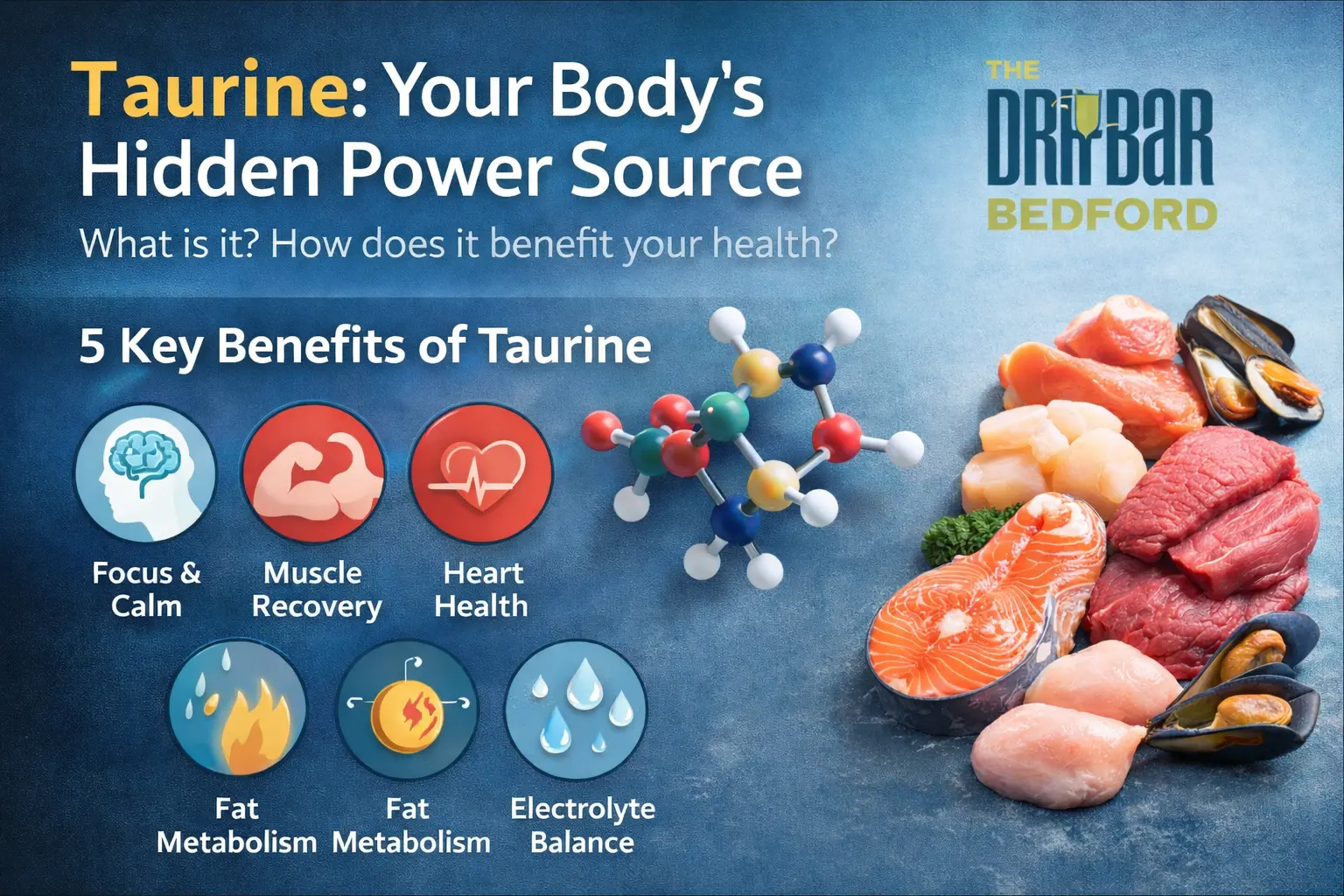
Taurin: Your Body’s Hidden Power Source
While often associated with energy drinks, Taurine is actually a naturally occurring amino acid found in high concentrations in your brain, heart, and muscles. It acts as a cellular stabilizer and a potent antioxidant. However, chronic stress, high-intensity training, and aging can rapidly deplete your natural reserves.
What Exactly is Taurine?
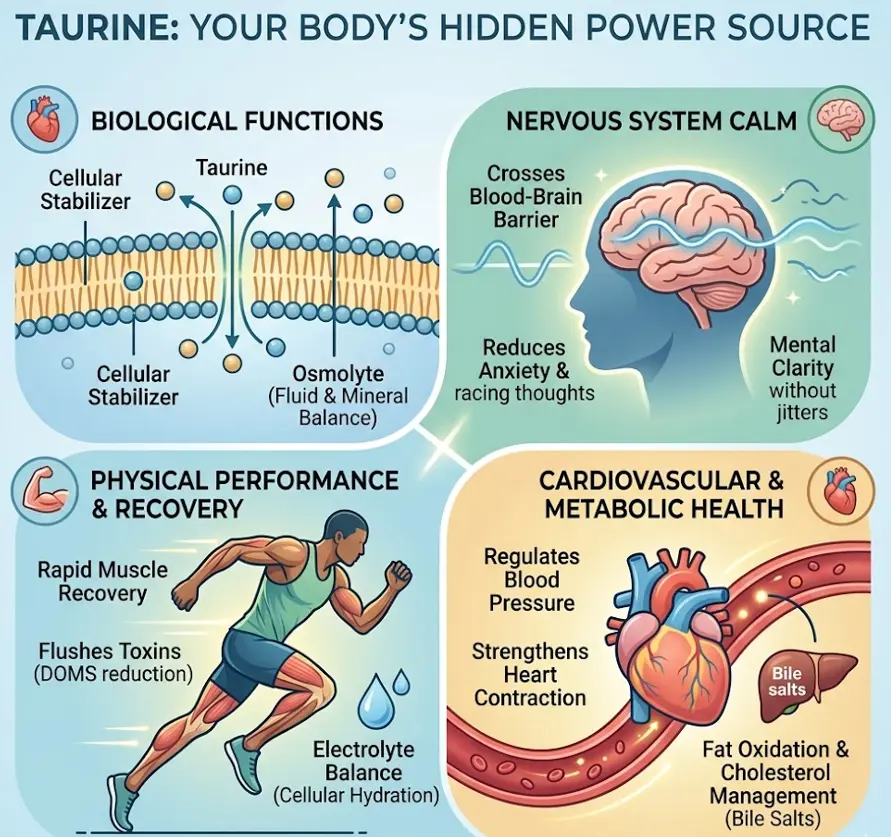
Unlike other amino acids, Taurine isn't used to build protein. Instead, it functions as a cytoprotector (cell protector) and an osmolyte, meaning it regulates the fluid and mineral balance inside your cells. In the nervous system, it mimics the effects of GABA to help "quiet" an overactive brain.
5 Scientifically-Backed Benefits of Taurine
Neurological Calm & Focus: Taurine crosses the blood-brain barrier to reduce "racing thoughts" and anxiety. It provides mental clarity without the jitters associated with stimulants.
Rapid Muscle Recovery: During exercise, metabolic waste products build up in the muscles, causing soreness. Taurine helps flush these toxins. Our athletes in Andover and Bedford report a 40% faster recovery time from DOMS (Delayed Onset Muscle Soreness).
Cardiovascular Resilience: It helps regulate blood pressure and strengthens the heart’s contraction force, supporting long-term heart health.
Metabolic & Fat Oxidation: Taurine is essential for the production of bile salts in the liver, which are necessary for the breakdown of fats and cholesterol management.
Electrolyte Balance: It moves essential minerals like potassium and magnesium in and out of cells, ensuring superior hydration at a cellular level.
Safety & Potential Side Effects
Taurine is considered one of the safest amino acid supplements when administered at clinical dosages. However, awareness is key:
Mild Hypotension: Because it can relax blood vessels, individuals with naturally very low blood pressure may feel a slight sense of "heaviness" or relaxation.
Digestive Sensitivity: This is common with oral capsules but is virtually non-existent with IV therapy as it bypasses the gut entirely.
Safety Directive: Patients with pre-existing kidney conditions should always consult with our medical director before starting a high-dose amino acid protocol.
The Delivery Dilemma: Infusion vs. Energy Drinks
Most people consume taurine via sugary energy drinks. Unfortunately, the high caffeine and glucose content in these drinks counteract Taurine’s calming benefits and lead to an insulin crash.
How to Get Taurine Naturally?
Taurine is found in the highest concentrations in tissues that are electrically active or under high oxidative stress, such as the heart, brain, and skeletal muscles.
Food Category | Top Sources | Why it works |
Shellfish | Scallops, Mussels, Clams | These are the undisputed kings of taurine. Scallops contain some of the highest levels recorded in nature. |
Dark Poultry | Chicken Thighs, Turkey Legs | Dark meat contains significantly more taurine than white meat (like breasts) because these muscles are used more frequently. |
Seafood | Salmon, Tuna, Sardines | Cold-water fish are excellent sources, especially when consumed with the skin or in "whole" forms like sardines. |
Red Meat | Beef Liver, Heart, Steak | Organ meats (specifically the heart) are bio-available taurine powerhouses. |
Dairy | Grass-fed Milk, Greek Yogurt | Contains modest amounts, though much lower than seafood or meat. |
The "Bioavailability" Factor: Cooking Matters
How you prepare your food determines how much taurine actually reaches your cells. Taurine is water-soluble, meaning it can be "lost" during certain cooking processes.
Boiling/Poaching: This is the least efficient method. If you boil chicken or fish, a large percentage of the taurine leaches into the water. If you aren't consuming the broth (like in a soup), you are losing the nutrient.
Searing/Grilling: Higher heat for shorter durations helps "lock in" the amino acids within the muscle fibers.
Raw/Rare: Consuming high-quality, safe raw sources (like Sashimi or rare steak) preserves the highest possible taurine content.
How the Body Creates Its Own (Endogenous Production)
Your body is capable of synthesizing a small amount of taurine on its own, but it requires specific "building blocks" to do so. If you are a vegetarian or vegan, optimizing these precursors is your only natural pathway:
Cysteine & Methionine: These are the precursor amino acids found in eggs, sunflower seeds, and legumes.
Vitamin B6 (Pyridoxine): This is the essential co-factor. Without enough B6, your body cannot convert those amino acids into taurine. Sources include bananas, chickpeas, and potatoes.
Why Dietary Intake Often Falls Short
Even with a perfect diet, several factors can cause your taurine levels to plummet, making "natural" intake insufficient for peak performance:
High Stress/Cortisol: Stress causes the body to excrete taurine through urine at a higher rate.
Intense Exercise: Muscle exertion drains taurine stores to manage electrolyte balance and oxidation.
Aging: The body’s ability to synthesize taurine naturally declines as we age, often dropping significantly after age 40.
Conclusion: Is Taurine Right for You?
If you are struggling with "Executive Burnout," slow athletic recovery, or persistent brain fog, your Taurine levels may be sub-optimal.
Ready to optimize your biology? Visit our clinics in Bedford, MA for a customized recovery IV therapy designed for your specific metabolic needs.
Why is my body’s natural Taurine production not always enough?
Taurine is a "conditionally essential" amino acid. While your body can synthesize it from B6 and other amino acids, levels drop drastically during periods of high physical stress, intense exercise, or chronic inflammation. Research shows that as we age, our natural taurine blood levels can fall by up to 80%, making supplemental sources critical for maintaining cellular health.
Can I get enough Taurine from my diet alone?
While Taurine is found in meat, fish, and dairy, your levels can be significantly depleted by chronic stress, intense exercise, or aging. For high-performance athletes or busy professionals, dietary intake often isn't enough to reach the therapeutic levels needed for rapid recovery and cognitive optimization.
What is the difference between Taurine and other amino acids like BCAAs?
Most amino acids (like BCAAs) are "proteogenic," meaning they are used as building blocks for muscle tissue. Taurine is non-proteogenic; it doesn't build muscle fibers. Instead, it acts as a "manager" for the muscle—regulating hydration, preventing oxidative damage, and ensuring the electrical signals in your heart and brain fire correctly.
Is Taurine actually made from bull urine?
This is a common urban legend. While Taurine was first isolated from ox bile in the 1820s (hence the name from the Latin Taurus), the taurine used in professional supplements today is synthetically produced in high-tech laboratories. It is vegan-friendly and has no connection to animal waste products.
Does Taurine affect sleep quality if taken in the evening?
Unlike caffeine, Taurine is not a stimulant. It is actually neuroprotective and helps regulate the "calming" neurotransmitter GABA. Many researchers suggest that taking Taurine in the evening may actually improve sleep quality by lowering cortisol and calming an overactive nervous system, helping you drift into a deeper REM cycle.