What Is The 3-3-3 Rule in Mental Health? Your Instant Grounding Tool
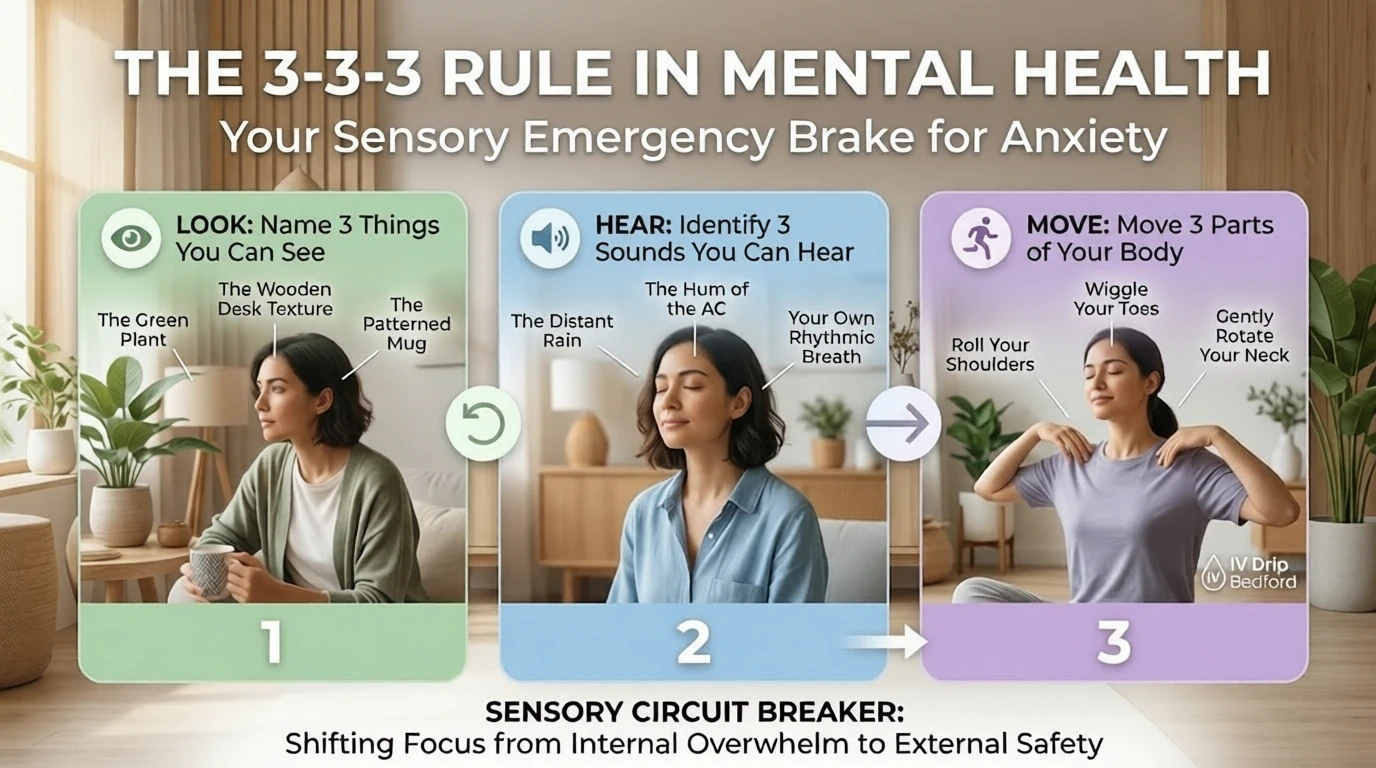
The 3-3-3 rule is a mindfulness grounding technique used to ease anxiety. It involves identifying 3 things you see, 3 things you hear, and moving 3 parts of your body. This process diverts the brain from anxious internal rumination to external sensory input. This helps to calm the nervous system and anchor the individual in the present moment.
When anxiety strikes, it often feels like your mind has traveled into a future full of "what-ifs" or a past full of regrets. Your heart races, your breath becomes shallow, and you feel disconnected from the present. To pull yourself back, you need a sensory circuit breaker.
The 3-3-3 Rule is a simple yet powerful grounding technique recommended by mental health professionals to manage anxiety and panic in real-time. It is a cornerstone of sensory mindfulness that helps you transition from a state of hyper-arousal to a state of awareness.
By practicing this rule, you support your mental and emotional health. These are two of the critical 4 Pillars of Wellness required for a balanced life.
How to Practice the 3-3-3 Rule?
This technique is effective because it can be done anywhere. Whether you are at a meeting, in your car, or during a busy event in Bedford, you can use it without anyone else knowing you are doing it.
1. Look: Name 3 Things You Can See
Scan your environment and pick out three specific objects. Do not just glance. Notice their color, shape, or how the light hits them.
Example: A green leaf, a crack in the sidewalk, or a blue coffee mug.
2. Listen: Identify 3 Things You Can Hear
Shift your attention away from your internal thoughts and toward the external world. Try to find three distinct sounds.
Example: The hum of a refrigerator, distant birds chirping, or the sound of a clock ticking.
3. Move: Move 3 Parts of Your Body
Finally, bring your awareness back to your physical form. This helps re-center you in your body.
Example: Wiggle your toes, tap your fingers against your thigh, or gently roll your shoulders.
Why Grounding Techniques Like the 3-3-3 Rule Work?
Grounding techniques like the 3-3-3 rule work by shifting your brain's focus from the Amygdala, which triggers the "fight or flight" response, back to the Prefrontal Cortex. This is the part of the brain responsible for logical thinking.
This shift is essential for maintaining the calm and clarity described in the 5 C’s of Wellness & Mental Health.
The Biological Connection: While the 3-3-3 rule is an excellent mental tool, it is much easier to perform when your nervous system is physiologically supported. When you are deficient in key nutrients like Magnesium or B-vitamins, your body stays in a "high-alert" state. This makes grounding more difficult.
Grounding techniques are your first line of defense, but true mental resilience requires a holistic approach. At IV Drip Bedford, we provide the physiological support your nervous system needs to stay resilient against stress. Our IV Drip for Stress & Relaxation helps replenish these vital minerals, providing the biological foundation your mind needs to stay calm and focused.
Can The 3-3-3 Rule Stop A Panic Attack?
While it may not stop a severe panic attack instantly, it is an effective tool to de-escalate symptoms. By forcing the brain to process external stimuli, it slows down the heart rate and helps interrupt the panic loop.
Is The 3-3-3 Rule The Same As Meditation?
No. While both involve mindfulness, meditation is often a preventative practice. The 3-3-3 rule is an active intervention meant to be used in the moment when stress is high.
How Often Should I Use Grounding Techniques?
You can use the 3-3-3 rule as often as needed. Many people practice it even when they feel calm to strengthen their mental muscle. Bu makes it easier to remember during moments of high stress.
What If I Can't Hear 3 Things?
If you are in a quiet room, listen for the sound of your own breath, the rustle of your clothes, or even the sound of silence itself. The goal is the intentional act of listening.
Does Diet Affect How Well Grounding Works?
Yes. A body in a state of nutritional stress, such as dehydration or vitamin deficiency, is more prone to anxiety. Supporting your physical health makes your mental grounding tools much more effective.